Diploma Programs
Shaping bright minds to transform global health
Diploma Programs (HIAHS )
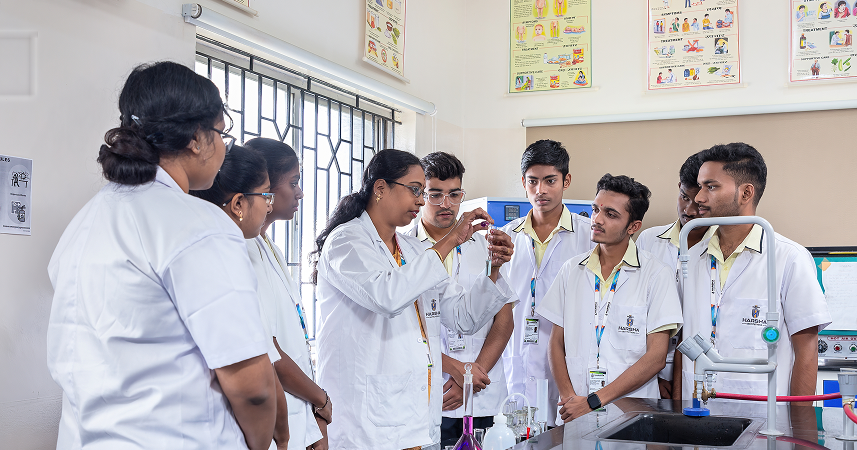
DMLT, Diploma in Medical Laboratory Technology
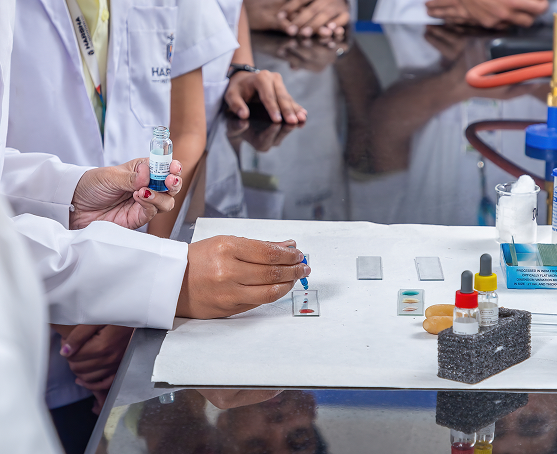
We offer a Diploma in Medical Laboratory Technology for students to learn the ability to perform diagnostic tests on blood, urine, and tissue samples. These play a critical role in disease identification and treatment. The program offers hands-on training in operating laboratory equipment and working across fields such as microbiology, hematology, and biochemistry.
Graduates can work in blood banks, research facilities, diagnostic labs, and hospitals. There are opportunities to focus on areas such as molecular diagnostics or clinical pathology. You can also opt for further study in specialized lab sciences.
Minimum Eligibility for Admission
- The candidates who have completed Pre-University (10+2) examination with Science subjects – PCB, PCMB, CBZ as the major subjects will be admitted to the 2nd year diploma course.
- The candidates who have completed SSLC or equivalent examination will be admitted to the 1st year diploma course.
- Eligibility for admission is as per Para Medical Board (GOK) norms as amended from time to time
DMIT, Diploma in Medical Imaging Technology
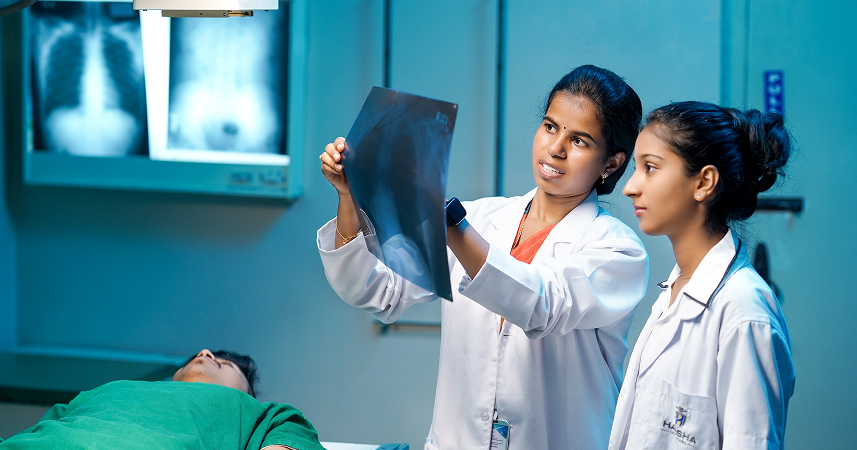
We offer a diploma course of 2 years for PUC passed students and 3 years for SSLC qualified students in medical imaging technology. We prepare them for careers in the healthcare industry by learning how to use diagnostic tools like ultrasounds, CT scans, MRIs, and X-rays. When it comes to helping radiologists with precise imaging for diagnosis and treatment planning, graduates are essential.
Hospitals, diagnostic facilities, and imaging clinics offer career options, with the opportunity to specialize in areas such as ultrasound or MRI. Additionally, this diploma opens access to academic and research positions.
Minimum Eligibility for Admission
- The candidates who have completed Pre-University (10+2) examination with Science subjects – PCB, PCMB, CBZ as the major subjects will be admitted to the 2nd year diploma course.
- The candidates who have completed SSLC or equivalent examination will be admitted to the 1st year diploma course.
- Eligibility for admission is as per Para Medical Board (GOK) norms as amended from time to time.
DOT – Diploma in Operation Theatre & Anesthesia Technology
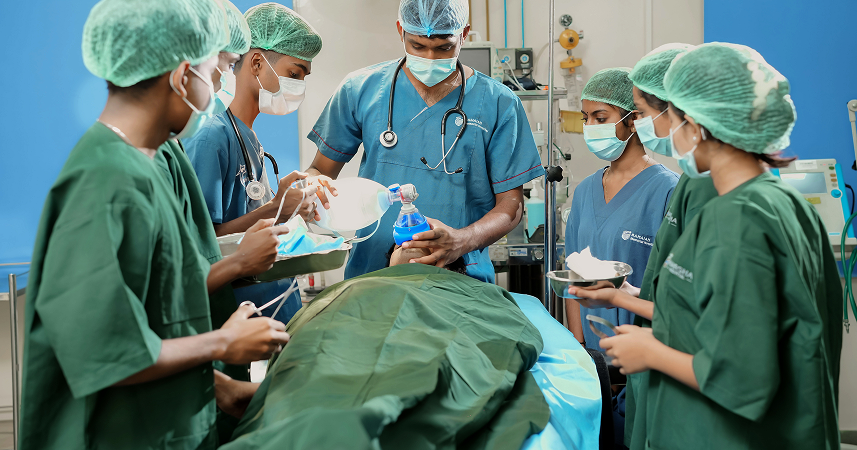
With this Diploma course, you can become an Operation Theatre Technician and play a crucial role in managing all aspects of the operation theatre (OT). You will be trained to prepare patients for surgery, maintain and organize surgical instruments, arrange OT equipment such as tables and anesthesia supplies, and support the surgical team. You will have to ensure proper sterilization, drug and gas inventory, and overall OT hygiene and efficiency.
After graduation, you can explore roles in hospitals, healthcare units, medical research centers, AIIMS, clinics, and nursing homes, with many career prospects in both public and private sectors.
Minimum Eligibility for Admission
- 10th Graduate
DDT – Diploma in Dialysis Technology
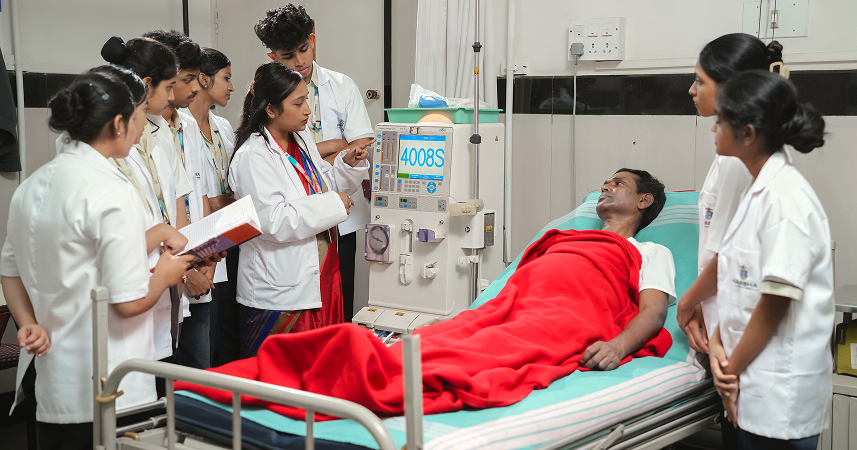
This Diploma course offers you to specialize in Dialysis Technology which focuses on the treatment of patients with kidney failure. You will be trained to operate dialysis machines that remove waste and excess fluids from the body, functioning as an artificial kidney.
In addition to machine handling, learning maintenance techniques, basic troubleshooting, and patient care practices is also the norm. The program covers patient counseling, dietary guidance, and monitoring for treatment compliance.
Graduates can work in hospitals, dialysis centers, specialty clinics, labs, training institutes, and other healthcare facilities. There is a rising demand for dialysis services across the globe.
Minimum Eligibility for Admission
- The candidates who have completed Pre-University (10+2) examination with Science subjects – PCB, PCMB, CBZ as the major subjects will be admitted to the 2nd year diploma course.
- The candidates who have completed SSLC or equivalent examination will be admitted to the 1st year diploma course.
- Eligibility for admission is as per Para Medical Board (GOK) norms as amended from time to time.
DOT – Diploma in Ophthalmic Technology
With this diploma degree, you will be an Ophthalmic Technology professional, trained to provide thorough eye and vision care, including refraction, dispensing, diagnosis, and management of ocular conditions. You will also be trained to detect visual impairments and recommend appropriate corrective measures.
Some of the major responsibilities for a career in this will include eye testing, diagnosing visual disorders, optometric counseling, and managing issues like color blindness and hereditary vision defects. You will develop the skills to prescribe spectacles, recommend eye exercises, and support vision rehabilitation.
Graduates can find opportunities with the Indian Red Cross Society, Indian Nursing Council, State Nursing Councils, hospitals, orphanages, and corporate CSR initiatives. The field offers a blend of clinical practice and community service.
Minimum Eligibility for Admission
- The candidates who have completed Pre-University (10+2) examination with Science subjects – PCB, PCMB, CBZ as the major subjects will be admitted to the 2nd year diploma course.
- The candidates who have completed SSLC or equivalent examination will be admitted to the 1st year diploma course.
- Eligibility for admission is as per Para Medical Board (GOK) norms as amended from time to time.
Diploma in X-Ray Radiology Technology
Significant advancements have been made in X-ray technology, with contemporary instruments like ultrasound, CT, and MRI transforming the precision of diagnosis. This diploma course offers exposure and understanding of the latest technology with hands-on training to operate these machines.
With WHO recommending primary health facilities to be outfitted with an X-ray machine, there is an increase in demand for professionals to handle this. Another important component of cancer treatment is radiotherapy, which calls for skilled paramedical personnel to handle specialized equipment in hospitals and cancer treatment facilities.
Read More
Those with a diploma can go on to get a B.Sc., M.Sc., or Ph.D. in related disciplines. Jobs as X-ray technicians or assistants in clinics, diagnostic labs, and hospitals are among the career options.
Minimum Eligibility for Admission
- The candidates who have completed Pre-University (10+2) examination with Science subjects – PCB, PCMB, CBZ as the major subjects will be admitted to the 2nd year diploma course.
- The candidates who have completed SSLC or equivalent examination will be admitted to the 1st year diploma course.
- Eligibility for admission is as per Para Medical Board (GOK) norms as amended from time to time.
DHI, Diploma in Health Inspector
This diploma course is designed to provide you with the knowledge and skills to maintain health and hygiene standards in medical and healthcare settings. You will be trained to work across various medical facilities, ensuring cleanliness and sanitation practices meet the highest standards.
Covering topics such as nutrition, rural and community healthcare, environmental factors and public health, the course is set to prepare you for real-world scenarios. With this degree, you can take on the roles of Sanitation Inspector, Food Inspector, Medical Health Assistant, Field Assistant, Lab Assistant, Public Health Officer, Hospital Maintenance Supervisor, and more.
Minimum Eligibility for Admission
- 10th Graduate
DMRT – Diploma in Medical Records Technology
The diploma course will train you on various aspects of patient record management. Apart from maintaining the patient’s medical records, you will also be responsible for operating medical software applications within the facility, and dealing with billing and insurance coding.
The course will take you through the traditional methods of filing and retrieving medical records. Once you have completed the course, you will be able to communicate effectively in writing on numerous topics related to healthcare, which will further enhance your skills in preparing the most precise medical records
Minimum Eligibility for Admission
- The candidates who have completed Pre-University (10+2) examination with Science subjects – PCB, PCMB, CBZ as the major subjects will be admitted to the 2nd year diploma course.
- The candidates who have completed SSLC or equivalent examination will be admitted to the 1st year diploma course.
- Eligibility for admission is as per Para Medical Board (GOK) norms as amended from time to time.

Affiliation & Recognition
Recognized by Government of Karnataka
Affiliated to Rajiv Gandhi University of Health Sciences (RGUHS), Bangalore
Approved by Karnataka State Paramedical Board (KSPB), Bangalore
Courses and Certification
We understand there exists a gap between academic learning in classrooms and industry requirements, and to bridge that gap, we offer value-added courses and certification programs to our students to improve their skill set.
We offer 5 courses for our diploma programs:
Syllabus & Courses Brochures
Find the Syllabus for D.Pharm here
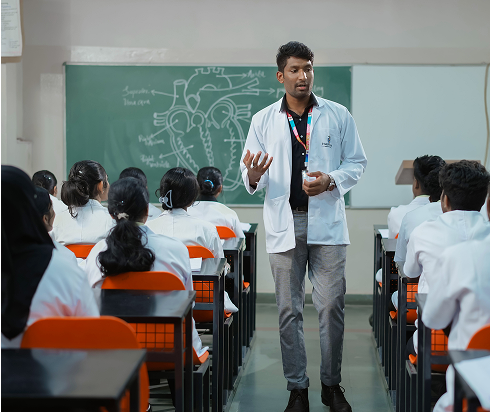
Events at Harsha Institute of Allied Health Sciences and Paramedical Sciences
Stay updated with the yearly schedule of important and upcoming events, find the list here –
| NO | Events | Download |
|---|---|---|
| 1. | Faculty Development Program | Download PDF |
| 2. | Guest Lecture | Download PDF |
| 3. | Industrial Visit | Download PDF |
| 4. | Seminars, Workshops, Conferences | Download PDF |
Annual Reports
Harsha Institutions presents annual reports that provide a comprehensive overview of the institution’s achievements, milestones, and performance across academics, administration, research, student development, and community engagement. Each report showcases our transparency, continuous improvement, and excellence in education.
Find the Annual Report here:
Academics Calendars
The Academic Calendar showcases the important dates for the academic year. Find the schedule outline for holidays, examinations, academic activities for you to stay updated and on the track with the college!
FAQs
What is the duration of the B.Sc Allied Health Science programs?
The duration is typically 2.6 years for 12th pass students and 3.6 years for 10th pass students, including academic study and hands-on clinical training.
Are there any industry-related roles apart from hospital-based work?
As a graduate, you can work in medical equipment companies as Application Specialists, Sales/Support Executives, or in R&D roles developing diagnostics and healthcare technologies. Entrepreneurship opportunities like running your own diagnostic or dialysis centers are also viable.
Can I pursue higher studies after completing the B.Sc Allied Health program?
You can opt for M.Sc. in a specialization, pursue MBA in Healthcare Management, or enroll in clinical research, hospital administration, or public health programs.
Are the diploma programs affiliated with any university or board?
The diploma programs are affiliated with Rajiv Gandhi University of Health Sciences (RGUHS) and are approved by the Karnataka State Paramedical Board (KSPB). The institute is recognized by the Government of Karnataka.
Can I pursue higher education after completing a diploma?
After completing a diploma, you can pursue B.Sc., M.Sc., or even Ph.D. in related paramedical or healthcare fields.